






 Asetukset
 Nopea toimitus
 Ilmainen toimitus
 Incoterms
 Maksutyypit


 Markkinapaikan tuote

Improving Appliance Connector Designs
2016-04-08
TE Connectivity’s new POWER TRIPLE LOCK (PTL) connector solution directly responds to the appliance industry’s desire for increased reliability and functionality, security and ease of use.
The world demand for major household appliances, or white goods, is forecast to rise 3.6% annually through 2015, exceeding 400 million units, according to the Freedonia Group. As consumers increasingly prefer “green” appliances with high functionality, appliance manufacturers must offer new operational features and energy-saving technology to sustain market share in this competitive market. This creates challenges for design engineers who face the addition of sophisticated electronic control circuitry that can increase the complexity of interconnecting the electrical and mechanical elements in many appliances.
A frequently underappreciated aspect of an appliance is its connectors. In some instances, the basic connector design has not changed in 25 years or more — in spite of manufacturers developing internet-connected and automatically controlled equipment for the appliance itself. Consequently, as appliance makers strive to provide more efficient and more easily controlled machines, the need for improving reliability, especially in appliances with electrical connections, has become a high priority for designers.
Power is another primary design concern in appliances. The same connector in the appliance is frequently used for power and signal lines, which means that consolidating the power and signal connection is needed to simplify connectivity and machine assembly. While dealing with the signal aspects are rather straightforward, the bigger challenge is power delivery, since power for pumps and motors requires carrying higher amperage than other system components.
With its existing breadth of appliance product offerings and a long history of supplying the appliance industry, TE Connectivity has demonstrated that it understands — and meets — the needs of the appliance market. Today, the company offers a new generation of connectors specifically designed to address requirements for reliability and functionality.
Listening to the industry
TE Connectivity has more than 70 years of experience in connector design and manufacturing experience. By conducting extensive discussions with appliance manufacturers and their key suppliers, TE designers were able to compile a detailed list of concerns, issues and desired and required improvements for interconnecting devices. What they found is that appliance makers expect many design attributes, including ease of connectivity, ease of servicing, flexibility, and overall increased robustness in connector designs.
However, foremost among their design concerns is connection reliability. This includes the request for improved contact retention and verification of proper seating of contacts within connector housings. It also includes improved connector mating and latching as well as verification of latch engagement, the mating connector position assurance and ease of repeatable operation, ergonomic features, and sufficient durability.
Another common connector problem is snagging of the cable by the latching mechanism. Pulling on the snagged wires can result in the latch being broken, allowing the connector to come loose, especially under high vibration in the application. Yet another consideration is the amount of force needed to mate connectors with increasingly larger numbers of power and signal pins.
Of course, any change to the design must be accomplished within costs that are appropriate for the appliance industry. The solution, for instance, needs to meet industry-standard mating requirements and it needs to be broad enough to solve a variety of appliance platforms and applications.
Finally, with appliance manufacturers using connectors over many design cycles, the connector needs to be “future proof” and designed to withstand the test of time.
TE’s POWER TRIPLE LOCK (PTL) connector solution
TE Connectivity used input from appliance manufacturers and appliance subcontractors — including harness makers and controls manufacturers — in the design process. This iterative process drew upon customer feedback on design proposals. TE Connectivity has introduced the POWER TRIPLE LOCK (PTL) connector solution to address the appliance industry’s needs and concerns. As its name suggests, the PTL has three integral mechanisms to ensure reliable connections. Additionally, several features designed into the connector family offer significant benefits compared to more traditional connectors.
Improved reliability – CPA, TPA, and audible latch
Improving upon current designs, the POWER TRIPLE LOCK’s built-in latching capability comes from reducing two latches to a single, robust latch that makes it easier to connect and improves connector reliability. The optional connector position assurance (CPA) device helps insure full mating of the connector and keeps the connector mated during shipment, installation, or when the appliance is in use.
A second optional mechanism, the terminal position assurance (TPA) device, provides secondary locking of the contact into the connector housing, providing a minimum of 15 lbs. of contact retention.
Figure 1 shows the PTL components of a 12-terminal connector. The audible latch of the POWER TRIPLE LOCK connector provides a “click” that lets assemblers know that the connector halves have been fully mated.
To address the problem of snagging wires under the latch, the PTL is designed with protective ribs flanking the latch, so wires are less likely to become entangled. In addition, the upgraded lanceless contact design prevents contacts from snagging or entanglement when crimped by harness makers.
The POWER TRIPLE LOCK connector employs a flat tab and receptacle contact design to allow for low mating forces and improved ease of assembly. The connectors have a maximum mating force of 1.50 lbs. per contact. The maximum insertion force of the contact into the housing is 3.0 lbs. In addition, the PTL tab and receptacle contacts are polarized to the circuit cavities in the housing, assuring proper orientation when inserting the contacts into the housings.
Figure 2 shows a closer look at the CPA and TPA devices. The CPA’s red color makes it easy to distinguish its presence and location in the connector assembly. The TPA has both single and double row configurations.
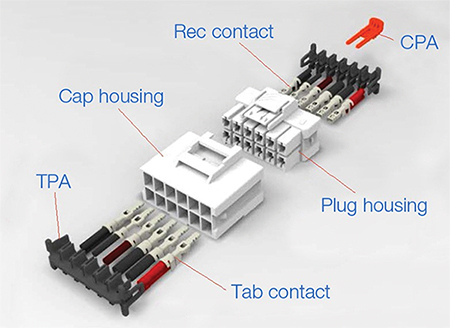
Figure 1: Product design components of the POWER TRIPLE LOCK connector system. (2 rows as shown, single and triple rows excluded here)
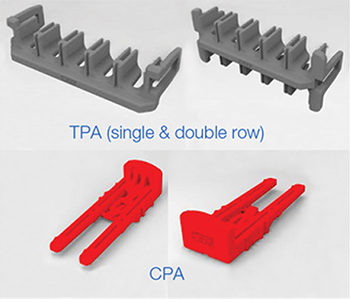
Figure 2: The CPA device and single- and double-row TPA devices.
Versatility and flexibility
One aspect of the POWER TRIPLE LOCK’s versatility comes from the number of product offerings. Figure 3 shows a small sample of the 448 available PTL configurations. The line includes virtually every position size for plugs and caps in free hanging as well as panel-mount configurations. The very broad PTL product line’s single, double and matrix position configurations with Pin 1 indication have four keying and color options to enable visual verification during assembly.
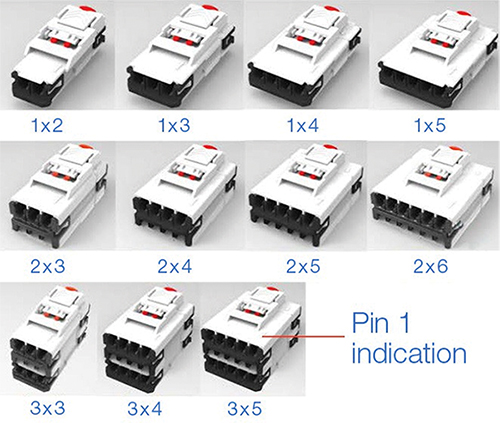
Figure 3: Examples of PTL position configurations.
Polarization and keying
Polarization slots and keys designed into the cap and plug housings of the PTL eliminate the possibility of mismating. Together, they prevent offset positioning to both the right and left sides, 90-degree rotation, reverse, offset down and reverse, offset down to corner and offset to corner and reverse possibilities.
Four key positions with different colors are available for visual verification of the correctly keyed plugs and caps. In addition, the different color of the TPA makes it easy to verify that it is or is not on a connector. Figure 4 shows the key and polarization slot positions.

Figure 4: Cap housing polarization and key slot for a 15-position connector.
Materials/ratings
One of the important aspects of the PTL product offering is the breadth of connector (plug and cap) materials – all V0-rated materials offered in four levels.
The standard material is polybutylene terephthalate (PBT), a thermoplastic engineering polymer (instead of nylon) that provides improved service for a broad range of appliances.
The second level is a Glow Wire (GWT, V0, NF 750C) option that conforms to the flammability requirements of IEC 60335-1 for unattended appliances with connections carrying current of greater than 0.2 Amperes.
The third level allows high-temperature applications, such as cooking appliances, to be addressed. The thorough approach to fulfilling customer requirements is demonstrated by a true 150°C, high-temperature solution. The housing and the contacts are rated at 150°C instead of 105°C.
The fourth level is a Hot Wire Ignition (HWI) option.
Since they are used in all four material levels, the TPA and CPA are both 150°C high-temperature materials. Color coding allows a quick visual check to ensure that the right material is used in a specific application.
Combined power and signal
Developed for power/signal applications, the PTL’s product line has seven terminals that address wire size ranging from 22- to 12-AWG plus double 18-Awg and double 20-AWG with a maximum current rating of 20 A on two circuits. The 20 A capability allows high current applications to be addressed with 12-AWG wire.
With improved reliability from many integral design aspects and the flexibility to address almost any standard or higher-level industry requirement, the ergonomically designed POWER TRIPLE LOCK platform is free from sharp corners and edges making it a “friendly” choice for workers on the assembly line while offering appliance designers a new approach for exceptional connectivity.
Application tools and design-in support
To make it easy for customers to implement the new PTL design methodology, high-speed termination tooling, hand tools and contact extraction tools are available. The tools support crimping prototypes (in small volumes) with hand tools up to and including HDE/Ocean applicators for semiautomatic and automatic tooling for high-speed termination of contacts onto wires.
In addition to the tools required to make the transition to the newest appliance connector system, 3D customer-view models provide outside shell dimensions for laying out harness and machine designs.
Improving appliance designs
With the POWER TRIPLE LOCK connector platform, TE Connectivity once again demonstrates its market leadership and capability to solve customers’ specific appliance connector problems. The variety of customer-selectable options provides a standardized approach that adds to the inherent reliability of the terminal position assurance, connector position assurance and audible latching mechanisms.
Disclaimer: The opinions, beliefs, and viewpoints expressed by the various authors and/or forum participants on this website do not necessarily reflect the opinions, beliefs, and viewpoints of DigiKey or official policies of DigiKey.







 Suomi
Suomi